What is IPTV? A Complete Guide for Resellers
 Anahit Aleksanyan9 min read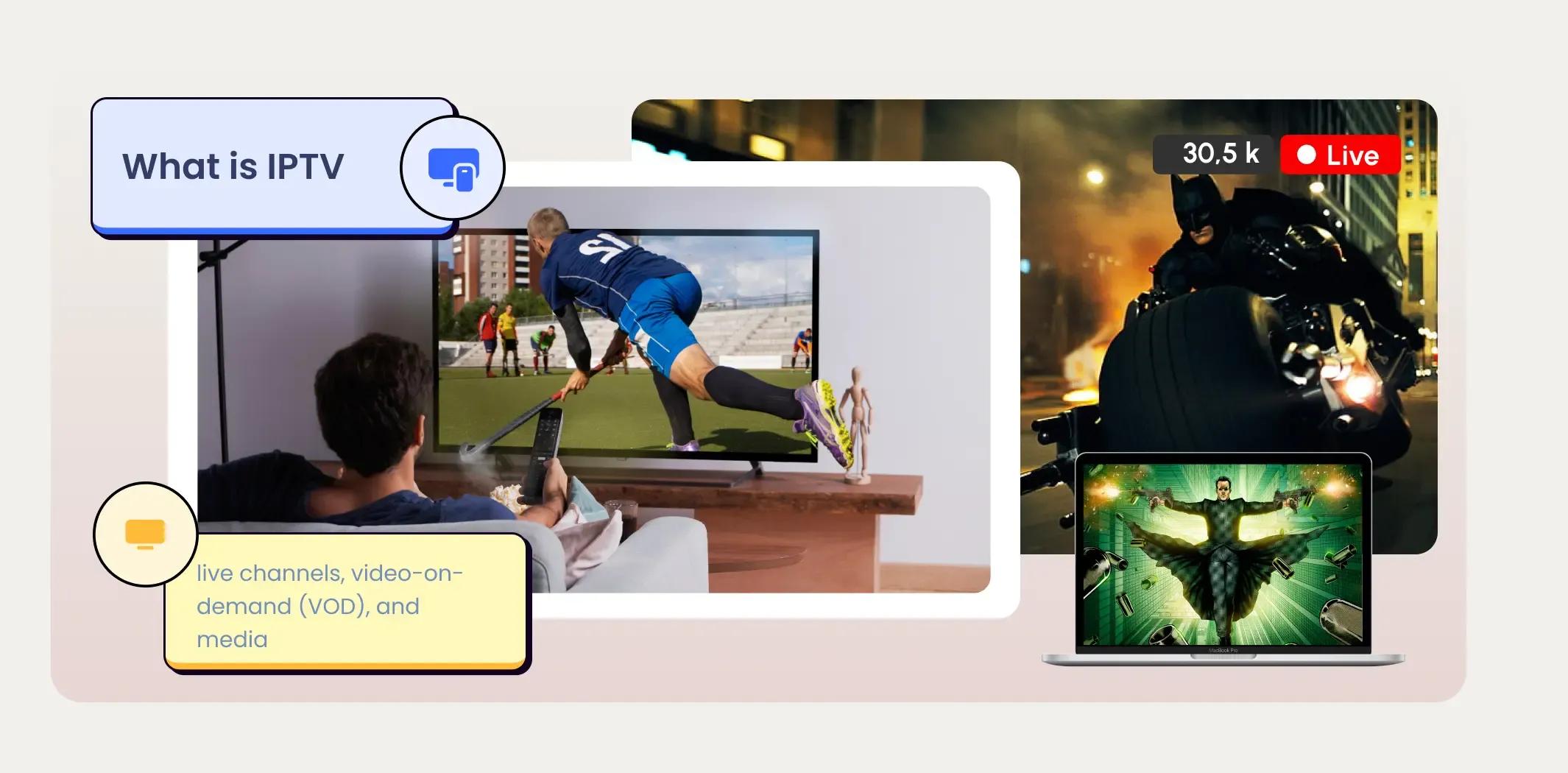
One of the most popular alternatives to traditional television is IPTV (Internet Protocol Television). Instead of relying on satellite signals or cable networks, IPTV delivers TV content over the internet, giving users more control over what they watch and when they watch it.
But IPTV isn’t just changing how people consume entertainment; it's also creating new business opportunities. For resellers, it offers a flexible and scalable way to meet growing demand for modern streaming solutions.
In this article, we’ll break down everything you need to know, including what IPTV is, how it works, the different service types, and the key advantages it offers. We’ll also explore why IPTV is a strong business opportunity for resellers, how Multi-Player.app supports reseller operations, and how IPTV compares to OTT streaming.
What is IPTV?
IPTV, or Internet Protocol Television, is a modern way of delivering television content over the internet instead of relying on traditional cable or satellite networks.
With IPTV, your users can stream live TV channels, access on-demand movies and shows, and watch previously aired programs all through an internet connection.
Compared to traditional TV, IPTV gives you and your customers far more flexibility and control. Viewers decide what to watch, when to watch it, and on which device, whether that’s a Smart TV, smartphone, tablet, or computer. For businesses and resellers, IPTV creates an opportunity to offer a more flexible, scalable, and user-driven entertainment solution that aligns with how audiences consume content today.
How IPTV Works
When a user selects a channel or program, the content is streamed directly from your servers to their device over the internet. This allows you to deliver live and on-demand content without relying on traditional broadcast infrastructure.
Behind the scenes, IPTV operates through a centralized system that manages channels, video libraries, and user access. Content is broken into small data packets and delivered using standard internet protocols, helping ensure stable and consistent playback. Your customers can access IPTV through apps, Smart TVs, set-top boxes, or web browsers, giving you the flexibility to support multiple devices and viewing environments.
Types of IPTV Services
IPTV offers different types of services to match the way people want to watch content.
The three main types are:
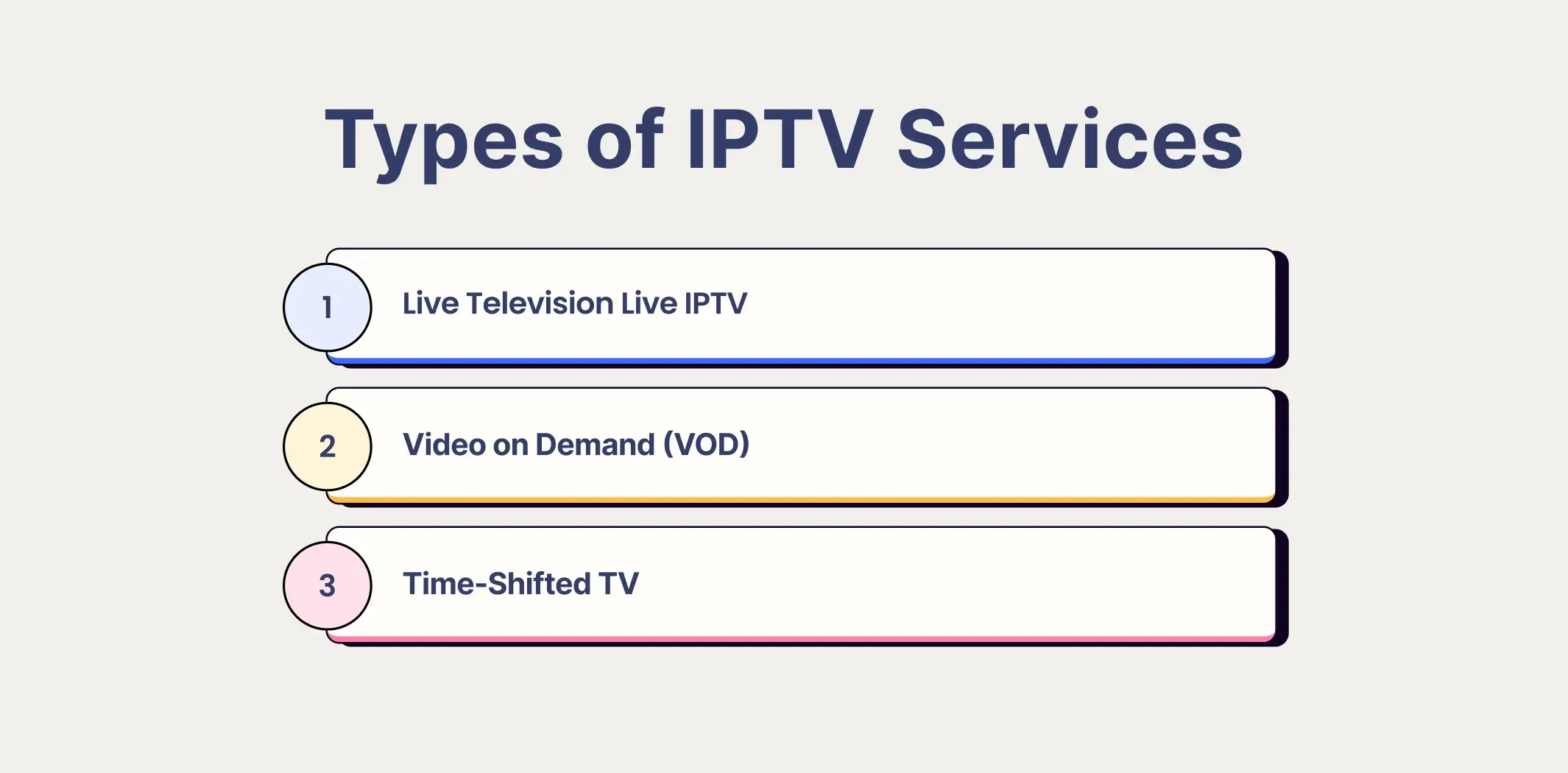
Live Television Live IPTV
This is similar to traditional TV, where users can watch live broadcasts of news, sports, and shows in real time but streamed over the internet. It is a replacement for traditional TV, allowing viewers to watch events such as live sports, news broadcasts, concerts, and award shows.
The main difference is how the content is delivered. Instead of coming through traditional cable or broadcast signals, the live feed is streamed directly to you over the internet. It requires a high-speed connection to ensure the stream is delivered in real time with minimal delay or buffering.
Video on Demand (VOD)
Video on Demand (VoD) is a digital content delivery model that allows your users to access movies, TV shows, and video content whenever it suits them, without being tied to a fixed broadcast schedule. Instead of tuning in at a specific time, viewers can choose what to watch and when.
By using the internet and IPTV technologies, VOD has become a core part of how you deliver modern content experiences. It gives you the flexibility to offer on-demand libraries that match today’s viewing habits and meet growing expectations for convenience and control.
Video on Demand is the most widely recognized IPTV service type. It enables viewers to access a catalog of movies and shows on demand, giving them full control over when they watch. This approach is used by major streaming platforms such as Netflix, Amazon Prime Video, and Disney+.
Time-Shifted TV
Time-shifted media, also known as catch-up TV, allows viewers to watch shows after they have already aired. If they miss an episode, they can simply access it through the IPTV service’s archive for a limited time after the original broadcast.
This model bridges traditional linear broadcasting and on-demand viewing. While the content still follows a broadcast schedule, IPTV gives your users the flexibility to watch it at their convenience.
Advantages of IPTV
IPTV offers many advantages over traditional television services, making it a popular choice for both viewers and resellers:
Flexibility and Convenience
IPTV gives users more control over what they watch and when they watch it. With on-demand content and catch-up options, viewers no longer need to follow fixed broadcast schedules.
Multi-Device Access
IPTV can be streamed on a wide range of devices, including smart TVs, smartphones, tablets, and computers. The exact compatibility depends on the IPTV app and platform, but most modern services support multiple devices.
Wider Content Selection
Many IPTV platforms offer international channels and niche content that may not be available through traditional cable or satellite packages. The available content depends on the provider and licensing agreements.
Improved Personalization
IPTV platforms can be customized to fit user preferences. Providers can offer personalized recommendations, curated playlists, and user-specific settings to enhance the viewing experience if the platform supports these features.
Cost-Effectiveness
IPTV can be more affordable than traditional TV packages, especially when users only pay for the content they want. Costs vary based on the provider, features, and content access.
Business Opportunities for Resellers
IPTV opens a strong business opportunity for resellers and service providers. With the right platform, resellers can offer flexible packages, multiple apps, and a scalable solution that meets growing customer demand.
These advantages show that IPTV is not only shaping the future of television but also creating strong business opportunities for companies entering the streaming market.
IPTV for Resellers: Why It’s a Business Opportunity
As more viewers move away from traditional cable and satellite TV, demand for IPTV is growing rapidly. This shift creates a strong opportunity for resellers to build a profitable business by offering modern streaming solutions.
Reselling IPTV lets you provide users with live TV, movies, and on-demand content without managing complex technical infrastructure. Platforms like Multi-Player.app make this process even easier. Resellers can activate a single device that grants access to 10 apps and over 20 platforms, delivering a complete entertainment experience from one solution.
Why IPTV is a Strong Business Opportunity for Resellers
Growing Market Demand More users are looking for flexible, affordable alternatives to traditional TV.
Recurring Revenue Many IPTV services use a subscription model, which creates a predictable monthly income.
Lower Overhead Costs Resellers don’t need to invest in expensive equipment or content licensing when they partner with established platforms.
Scalability With solutions like Multi-Player.app, it’s easy to expand your customer base without heavy technical investment.
Customer Loyalty A reliable IPTV service with a wide range of content helps resellers retain customers and stand out from competitors.
Entering the IPTV market now means tapping into a fast-growing industry with long-term potential, especially with a single platform that simplifies operations for resellers.
How Multi-Player.App supports IPTV Resellers
Multi-Player gives you ready-to-use, fully optimized video players for Smart TVs and TV boxes. Instead of developing and managing multiple players across platforms, you get a single, unified solution that works everywhere.
Why Multi-Player?
Multi-Player provides ready-to-use, fully optimized video players for Smart TVs and TV boxes. Instead of building and managing separate players for each platform, you get one unified solution that works seamlessly across all devices.
One service, multiple players for all devices Stream across Smart TVs and TV boxes from a single platform.
Smooth, stable playback with adaptive streaming Optimized streaming ensures consistent performance, minimal buffering, and fast start times.
Consistent UI and experience across platforms Deliver the same intuitive interface and user experience, no matter the device.
Automatic updates and maintenance Receive continuous performance improvements, compatibility fixes, and platform updates without manual effort.
Modern, user-friendly interface Designed for everyone, with no technical skills required.
Regular updates and new features Benefit from ongoing enhancements, new tools, and improved performance over time.
Multi-Player is the smarter way to scale streaming across all platforms reliably, efficiently, and future-ready.
IPTV vs OTT: What is the Difference?
IPTV and OTT both deliver video over the internet, but they work in different ways and serve different needs.
IPTV (Internet Protocol Television)
With IPTV, the content is delivered through a managed network controlled by a service provider. That means you have more control over quality, stability, and delivery. IPTV typically requires a specific app or device and is often used to provide live TV channels alongside on-demand content.
OTT (Over-the-Top)
OTT services deliver content over the open internet. Users can access these platforms from any device with an internet connection. OTT is mainly focused on on-demand streaming, although some services also offer live programming.
The Key Differences
-
IPTV operates in a controlled network environment, which helps ensure consistent quality.
-
OTT is accessible to anyone with an internet connection, but video quality can vary depending on the network.
-
IPTV usually includes live TV channels and on-demand libraries.
-
OTT is primarily on-demand streaming, though some platforms also provide live content.
Why This Matters for Your Business
If you’re building a streaming business or reselling content, you can benefit from both models. That’s where Multi-Player. comes in: it lets you offer IPTV services along with access to more than 20 OTT platforms through a single device. This hybrid approach gives your customers the best of both worlds: live TV, on-demand libraries, and maximum flexibility.
Conclusion
IPTV has transformed the way people watch television, offering flexibility, convenience, and a wider range of content than traditional TV. For resellers, this shift represents a significant business opportunity, especially as more viewers move toward internet-based streaming solutions.
By understanding how IPTV works, the different service types, and the benefits it provides, resellers can build a reliable and scalable streaming offering that meets modern viewer expectations. Multi-Player. makes this process even easier by providing a unified solution that supports multiple devices, reduces technical complexity, and helps resellers deliver a consistent and high-quality experience.
Whether you’re just getting started or looking to grow your IPTV business, the future is clear: IPTV is not just a trend; it’s the next step in how audiences consume entertainment.
Content Writer
Anahit is a technical content writer and digital marketing specialist who focuses on B2B content about IPTV, multiplatform media, and digital technologies. She creates clear and engaging content about modern media technologies. Her goal is to help readers easily understand complex topics and stay informed about the latest innovations in digital media.